THE COLLECTED PURSUIT
Exploring, evaluating, and collecting what proves worthwhile.
Exploring, evaluating, and collecting what proves worthwhile.
How an unexpected tablecloth became the starting point for a layered Thanksgiving table—and what I’d do differently next time.
How an unexpected tablecloth became the starting point for a layered Thanksgiving table—and what I’d do differently next time.
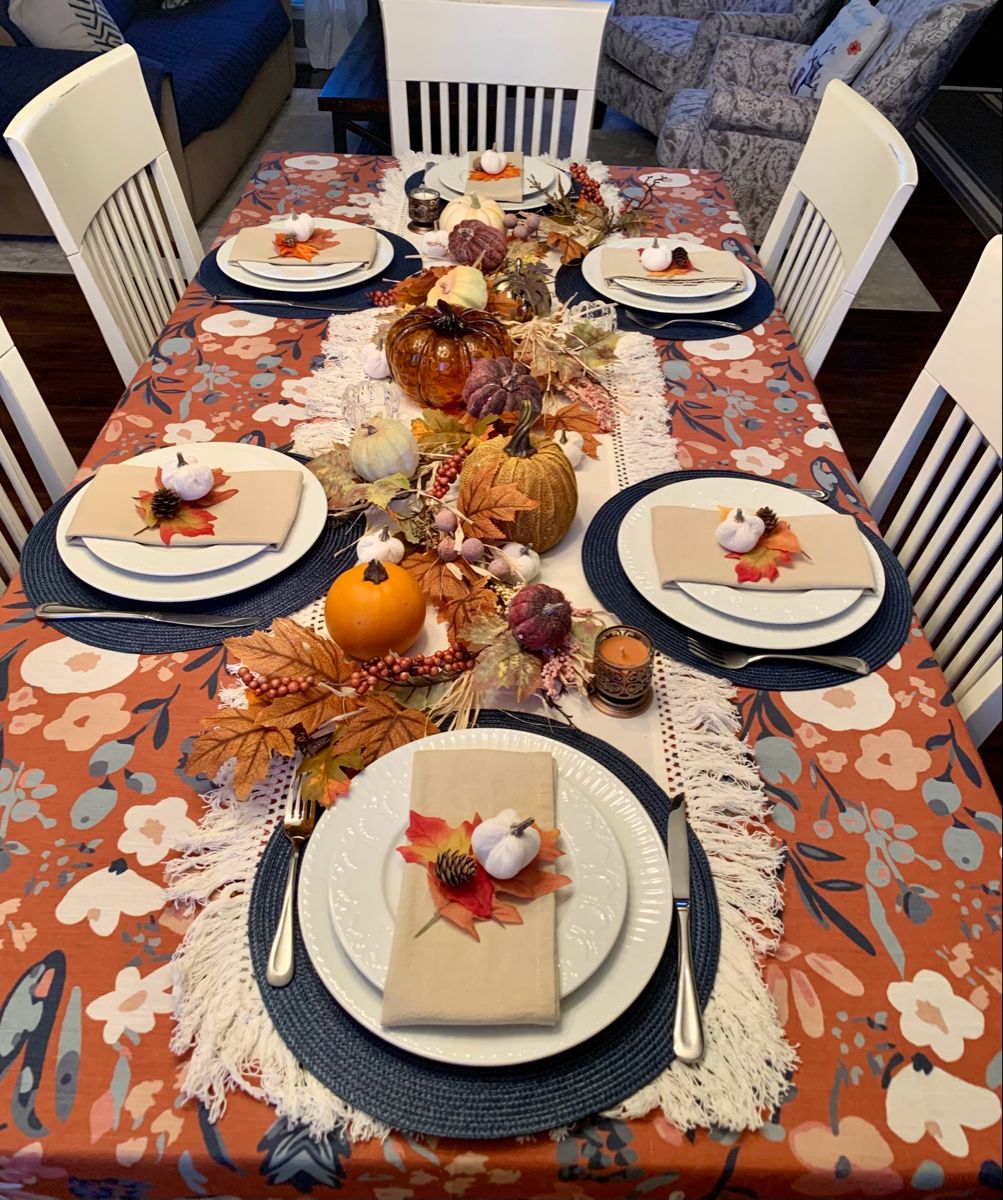
I wasn’t shopping for a Thanksgiving tablecloth.
I was at Kohl’s looking for something completely unrelated when a burnt-orange floral pattern caught my eye. Woven through it were shades of blue and cream, and I immediately pictured it in my dining room. The room is painted Sherwin-Williams Peppercorn, a deep charcoal gray with cool blue undertones, and blue-and-white transferware is displayed on the walls. The blue in the tablecloth echoed colors already in the room, while the orange brought in the warmth I wanted for fall.
It was also much bolder than I would ordinarily choose, which was part of the appeal. Rather than starting with an idea of what a Thanksgiving table should look like, I started with something that felt at home in the room. From there, the rest of the table came together one decision at a time.
The tablecloth’s biggest strength was also the first problem I needed to solve: there was a lot of pattern. I wanted it to be part of the composition, not the entire composition.
I already owned the ivory fringed runner, and placing it down the center gave the eye somewhere to rest. It softened the floral pattern and created a neutral backdrop for the centerpiece. The navy woven placemats picked up the blue in the tablecloth and the room, while creating a solid visual break between the pattern and the ivory dishes.
I deliberately chose woven placemats rather than something metallic or glossy. Between their texture and the fringe of the runner, the table was beginning to feel warmer, more organic, and a little less formal. That was exactly what I wanted: the feeling of a welcoming harvest meal rather than a formal holiday display.
The ivory ceramic plates were pieces I already owned, but their smooth glazed surfaces felt a little stark against the natural textures I was introducing elsewhere. An oatmeal-colored linen napkin softened the expanse of ivory without competing with the tablecloth. On top, I added a small velour pumpkin with an autumn leaf and pine cone, repeating the natural elements running through the centerpiece.
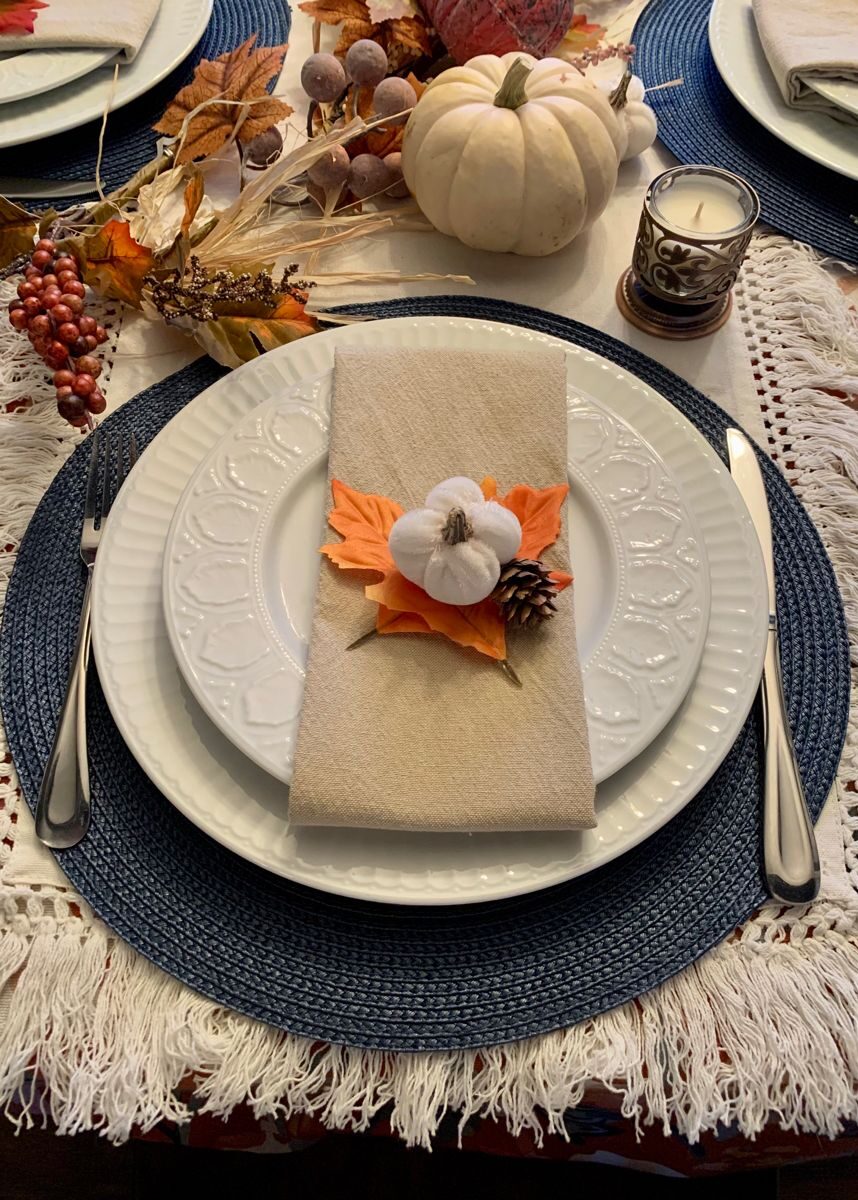
Those little arrangements did something beyond adding texture and color: they made each place feel special.
There is a difference between putting out the dishes because people are coming for dinner and composing a place specifically for someone who is going to sit there. The detail was small, but it made the gathering feel more like an occasion.
For the centerpiece, I wanted something seasonal without screaming Thanksgiving. A garland of leaves, berries, and straw ran down the center, surrounded by a mixture of real, ceramic, and glass pumpkins. Pine cones and autumn leaves carried those natural elements into the individual place settings.
Mixing materials kept the centerpiece from feeling overly coordinated. The bronze candle holders related to the warmer metallic finishes among the pumpkins, while candlelight added another layer of warmth. The result felt autumnal without depending on overtly themed Thanksgiving decor.
Looking back, one choice I would absolutely repeat is designing the table in relationship to the room around it. The Peppercorn walls and blue-and-white transferware were already part of the view, so I didn’t want to create a Thanksgiving table that ignored them. The tablecloth introduced autumn color while acknowledging the room’s existing palette. Navy repeated the blue, cream and oatmeal provided relief, and the natural textures kept everything warm.
A table setting may only be temporary, but it still lives inside a room. Letting the two relate made the whole space feel more cohesive.
As much as I loved the finished table, there was one problem: I used too much of it.
An abundant centerpiece running the length of a smaller dining table looks beautiful, but it occupies exactly the space needed for serving bowls and platters during a family-style meal. I had created a table that looked wonderful, but hadn’t left quite enough room for Thanksgiving dinner.
If I were serving buffet-style, I would happily recreate the centerpiece much as it was. Guests could fill their plates elsewhere, leaving the dining table for eating and conversation. For a family-style meal, though, I would edit it considerably.
I’d keep the tablecloth, runner, placemats, layered place settings, and the small details at each seat. But I’d concentrate the pumpkins and foliage into a smaller centerpiece and leave more open table surface for the food. It might lose a little drama, but the table would work better for the people gathered around it.
What started with an unplanned tablecloth ultimately became something more than a pretty table.
That’s my favorite part of setting a table: not creating something elaborate simply for the sake of decorating, but using a few considered details to tell the people gathering there that this meal—and their place at it—is special.
